
1. Timeless Elegance for the Modern Woman
Floral nail designs on short nails have become a staple in the world of modern beauty, offering the perfect blend of style and practicality. For those seeking a manicure that exudes sophistication without sacrificing everyday wearability, short nails with floral patterns are the ultimate solution. Whether heading out to work, attending a special event, or simply desiring beautiful nails for everyday life, floral designs provide a wealth of creative possibilities that beautifully complement shorter nail lengths.
The secret to creating stunning floral nail art on short nails lies in carefully selecting designs that enhance rather than overwhelm the nail space. Delicate petals, miniature blooms, and strategically placed flowers can transform short nails into exquisite works of art. This comprehensive guide showcases 24 exquisite floral nail designs specifically curated for short and elegant nails, ensuring you’ll discover the perfect style to express your personality while maintaining a polished, professional look.
Single accent flower designs are ideal for short nail enthusiasts who appreciate understated elegance over bold statements. This minimalist approach features one intricately detailed flower on your ring finger, set against a complementary solid color on the remaining nails. The simplicity ensures your short nails look refined and polished, without appearing cluttered or busy. This design works particularly well in professional settings where a polished nail appearance is crucial without being too distracting. You can choose from a range of flowers, including roses, daisies, or cherry blossoms, depending on your personal style and the current season. The solid base color provides the perfect backdrop for your accent flower to take center stage, becoming the focal point of your manicure.
Popular color combinations include nude nails paired with white flowers, soft pink bases with deeper pink blooms, or classic white nails with colorful floral accents. The single accent approach proves that sometimes, less truly is more when it comes to creating elegant nail art on shorter lengths. This timeless design remains suitable for any occasion, adding just enough personality to make your manicure feel special and intentional.
2. Tiny Scattered Blossoms
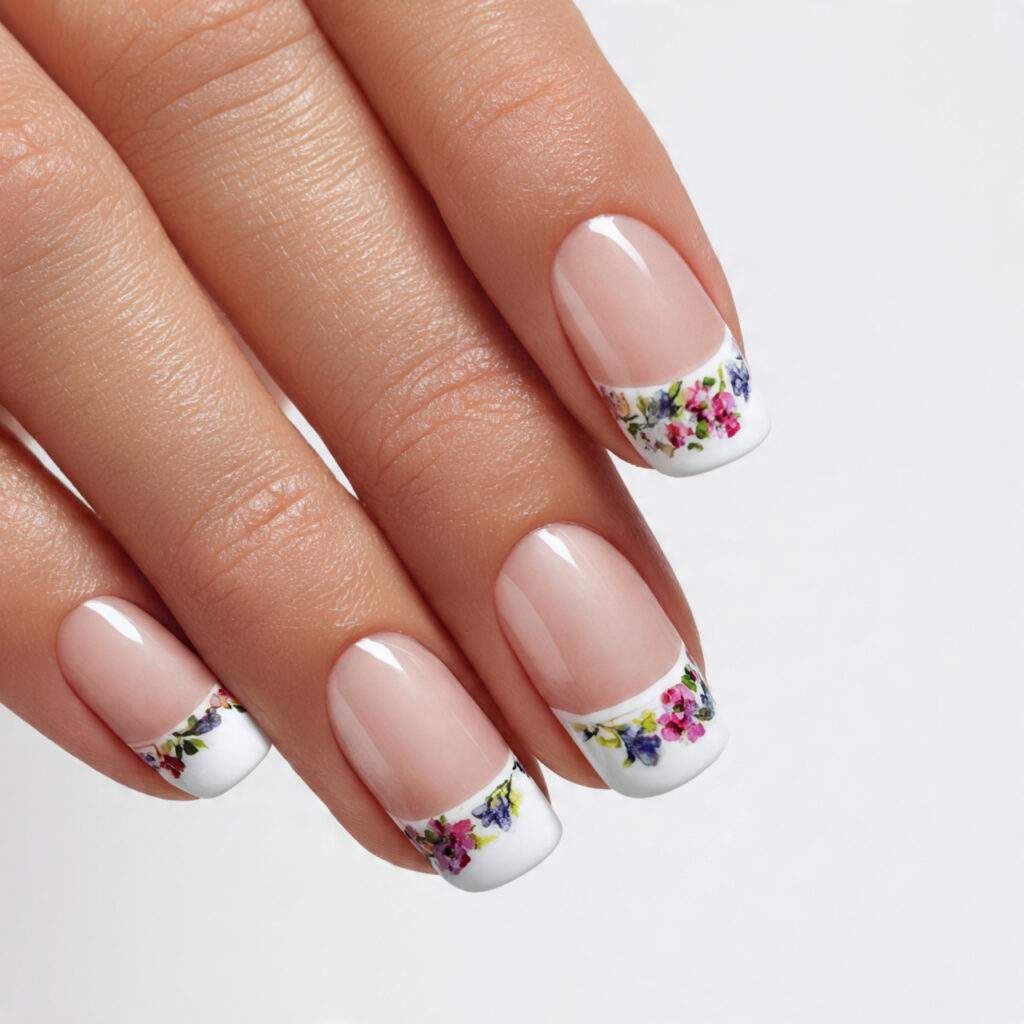
When it comes to creating a whimsical and enchanting aesthetic on short nails, tiny scattered blossoms take center stage. This charming design features small flowers dispersed randomly across the nail surface, evoking the carefree spirit of wildflowers growing in a lush meadow. The delicate scale of individual flowers ensures they’re perfectly proportioned for shorter nail lengths, avoiding the overwhelming effect that can occur when larger designs are used on limited space.
This versatile design allows you to scatter flowers across all ten nails for a show-stopping effect or limit them to specific fingers for a more understated approach. You can maintain uniformity with identical flowers or mix different varieties and sizes to create visual interest and depth. The scattered pattern works beautifully with both monochromatic color schemes and multicolored arrangements that capture the vibrant energy of spring. By incorporating scattered blossoms into your manicure, you can create a harmonious balance that’s essential for maintaining elegance on short nails.
4. Pressed Flower Effect
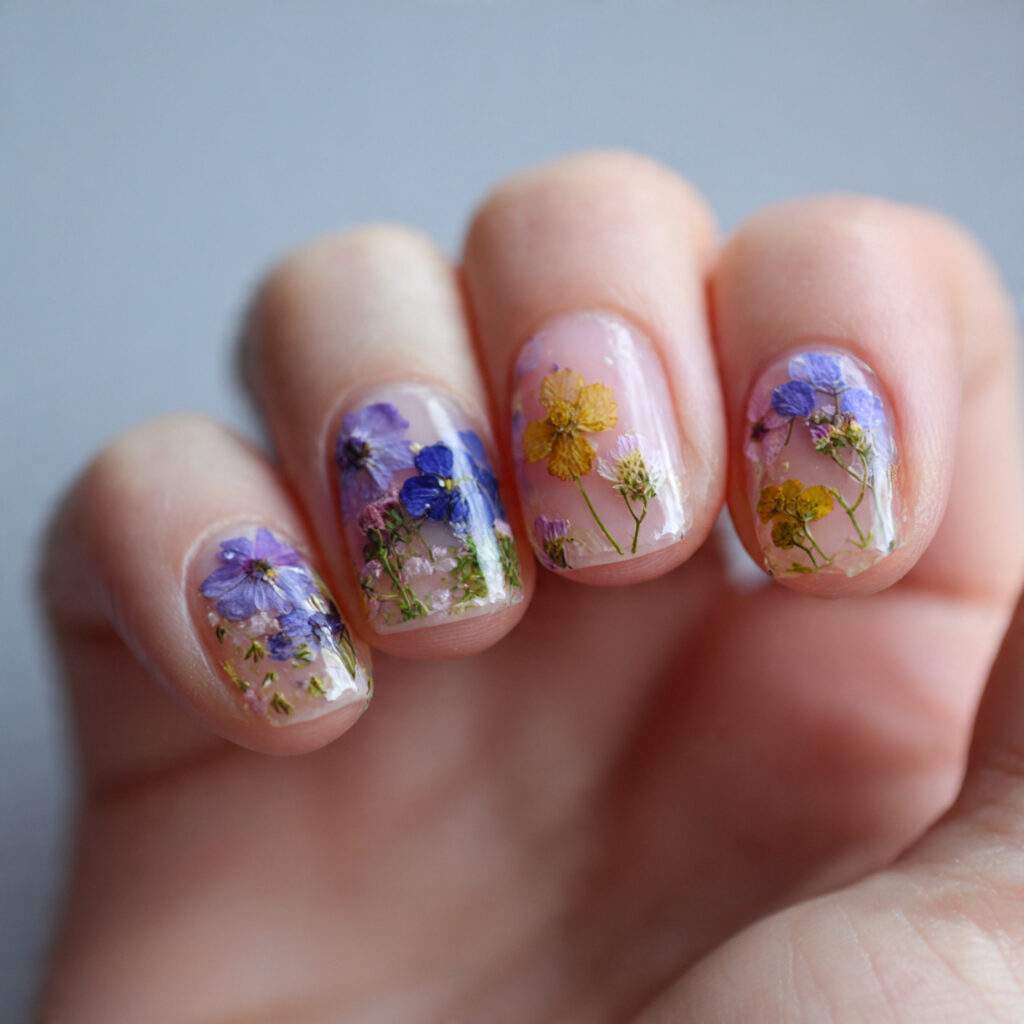
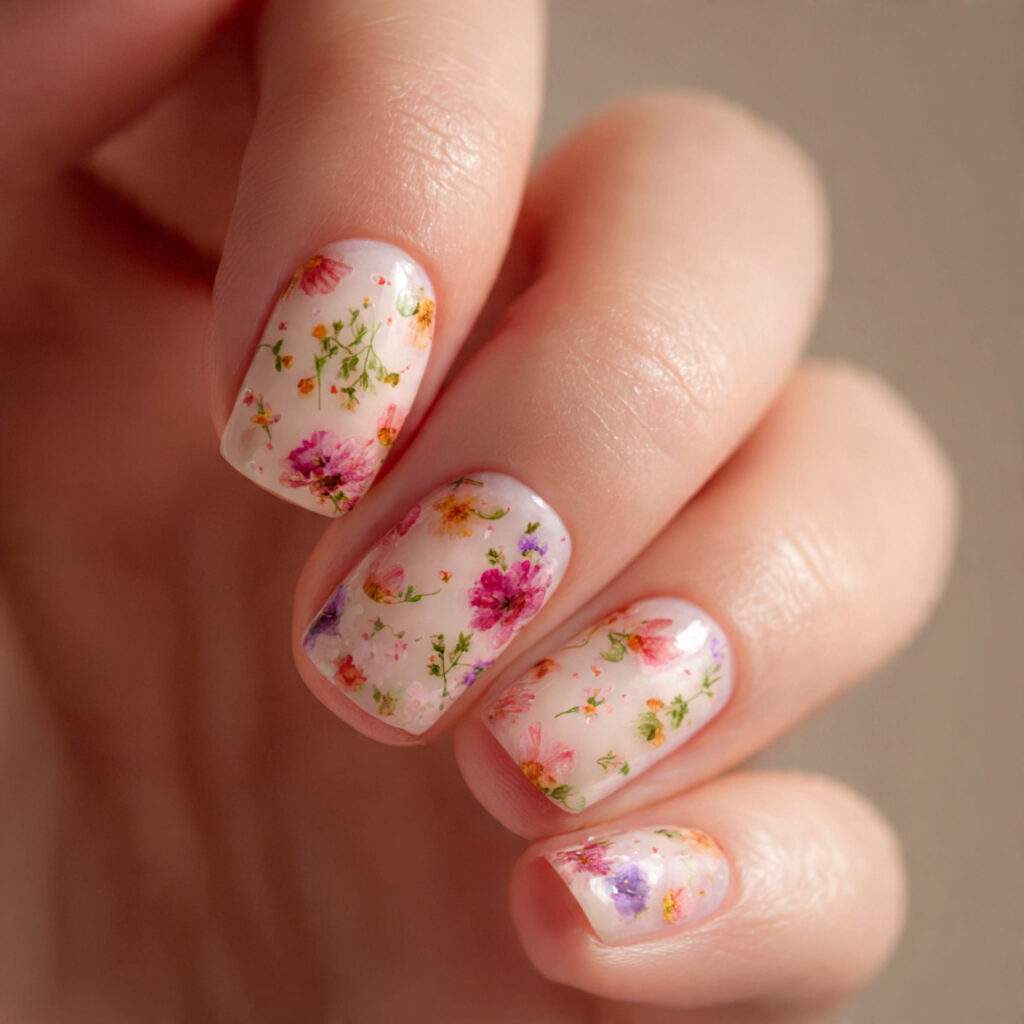
Pressed flower designs have captured the hearts of many with their enchanting, vintage botanical charm that elevates short nails to miniature masterpieces. This delicate technique transforms nails into stunning replicas of actual flowers, preserved in resin or clear polish, evoking a museum-quality aesthetic that’s hard to resist. The ethereal, translucent quality of pressed flowers makes them particularly striking on short nails, where the light, airy effect adds to the overall visual appeal without overwhelming the limited space.
Realistic pressed flowers, such as baby’s breath or delicate petals, work beautifully on short nails when properly proportioned, while hand-painted flowers offer more control over placement and color, achieving the same vintage-inspired look. Hand-painting flowers with watercolor techniques that mimic pressed botanicals allows for greater flexibility and creativity. The resulting design exudes a soft, romantic quality, perfect for those who adore delicate, whimsical beauty. Pressed flower designs typically feature natural, muted tones such as soft browns, faded purples, dusty pinks, and sage greens, set against neutral or sheer backgrounds. This design style’s understated elegance makes it perfect for everyday wear, as the delicate flowers won’t catch on clothing or surfaces.
5. Minimalist Line Art Flowers
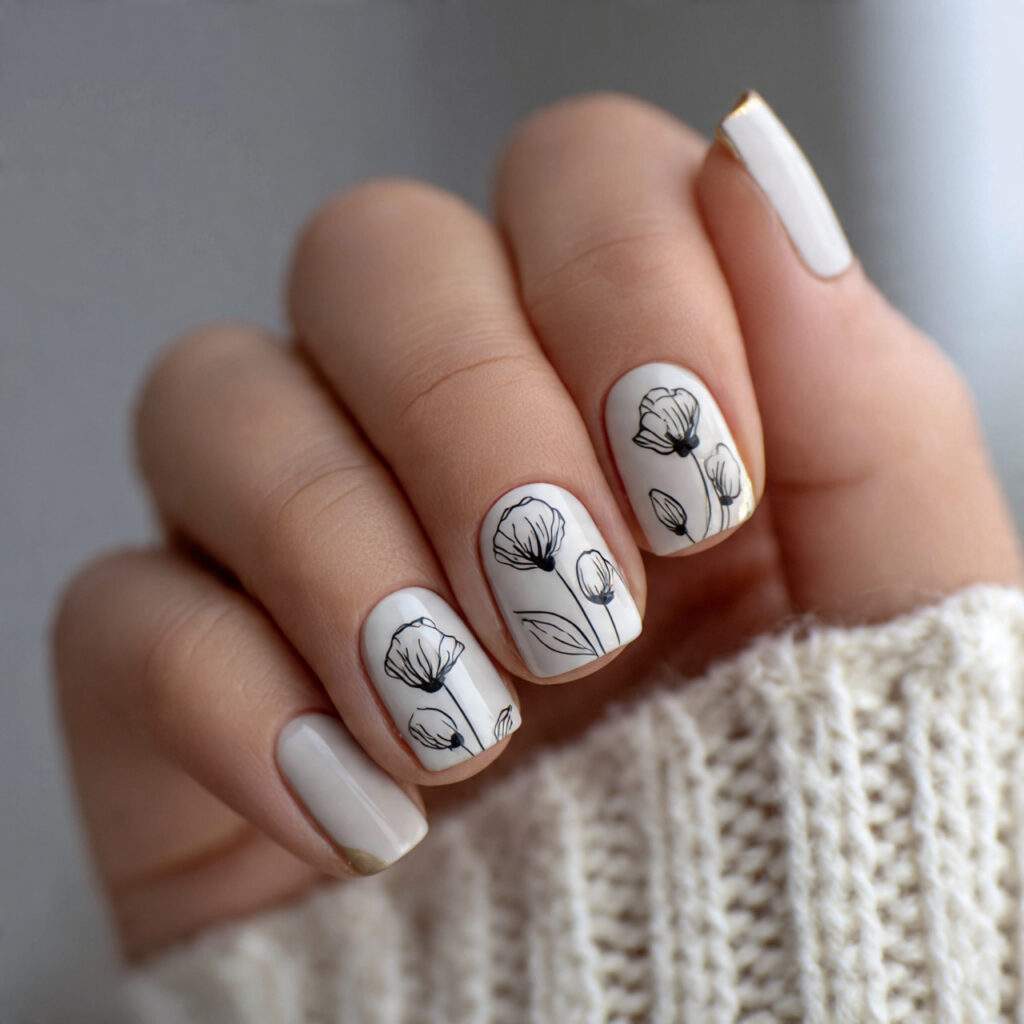
Minimalist line art flowers have taken the nail design world by storm, offering a contemporary twist on traditional florals. This modern approach focuses on essential outlines and flowing lines, creating sophisticated designs that feel chic and on-trend. For short nails, minimalist line art provides the perfect solution for incorporating florals without overwhelming the limited space.
The technique involves using very fine brushes or nail art pens to draw delicate lines that suggest flower shapes through minimal strokes. These abstract representations might include simple circle outlines for flower heads, curved lines suggesting petals, or flowing stems with basic leaf indicators. The beauty of minimalist line art lies in its ability to evoke a sense of floral imagery without explicitly showing it, leaving viewers’ imaginations to fill in the details. High contrast color combinations are essential for making delicate lines visible and impactful on short nails. Black lines on white or nude bases remain a popular choice, offering maximum contrast and modern sophistication. Contemporary variations include white lines on jewel tones, metallic gold or silver lines on neutral bases, or colorful lines on contrasting backgrounds for bolder statements.
6. Watercolor Floral Wash
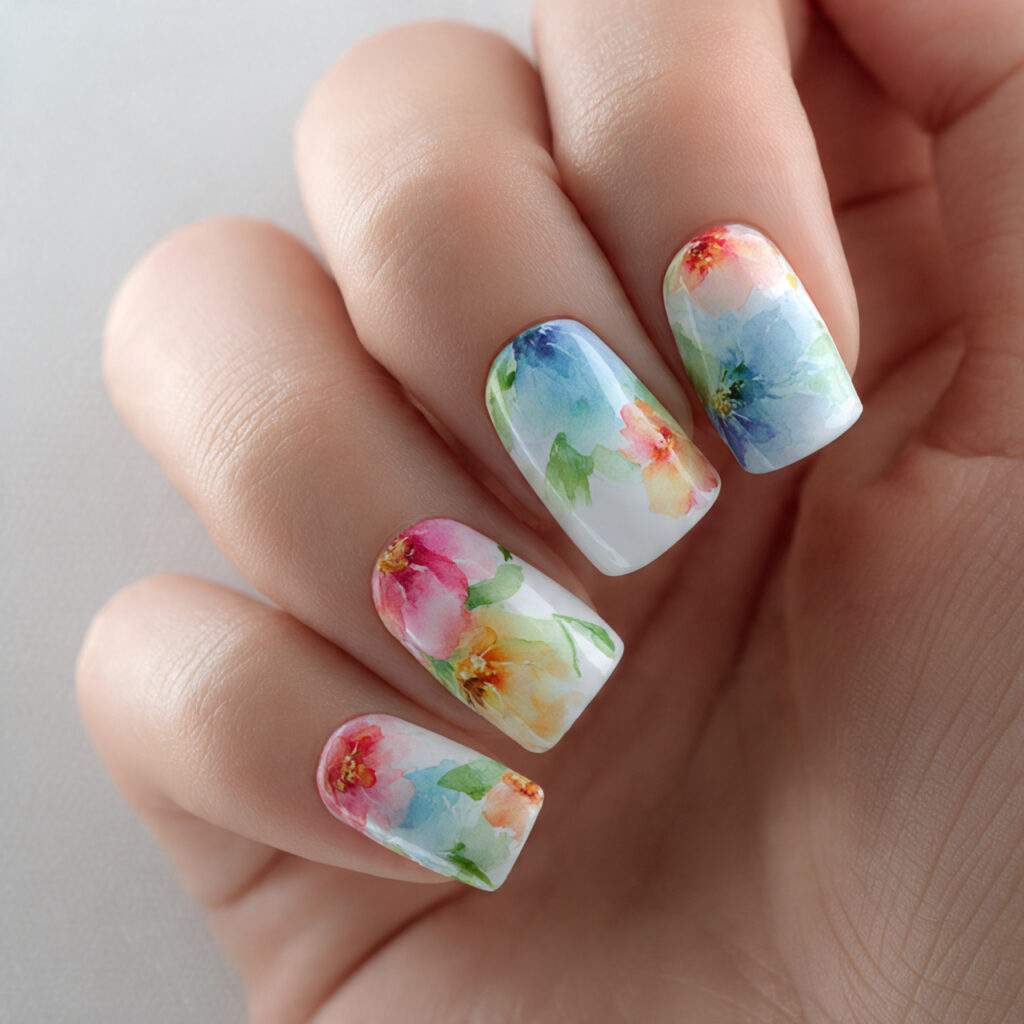
Watercolor-inspired nail art brings an air of artistic sophistication to short nails, as soft color blending and delicate flower suggestions evoke the dreamy quality of traditional watercolor painting. This technique effortlessly captures the essence of blooming flowers, with petals and leaves seeming to float across the nail surface in a gentle, ethereal dance. The visual interest of watercolor effects lies in their ability to create depth and dimension without requiring intricate detail work in small spaces.
Achieving authentic watercolor effects involves experimenting with specialized watercolor nail polishes or manipulating regular polish with clear topcoat to achieve a desirable level of translucency. The application process involves layering sheer color washes, allowing them to blend seamlessly at edges while building intensity in specific areas to suggest flower centers or petal clusters. This technique celebrates organic variation and imperfection, making it surprisingly adaptable for various skill levels.
Romantic hues dominate watercolor floral palettes, with popular combinations including soft pink and lavender washes suggesting roses, delicate blue and white hues creating forget-me-nots, or coral and peach tones evoking tropical blooms. Some designs incorporate metallic or glitter accents in flower centers, adding a touch of subtle sparkle that enhances the dreamy quality. The flowing, organic nature of watercolor designs guides the eye smoothly across nail surfaces, creating a sense of sophistication through color layering rather than detailed line work.
7. Daisy Chain Design
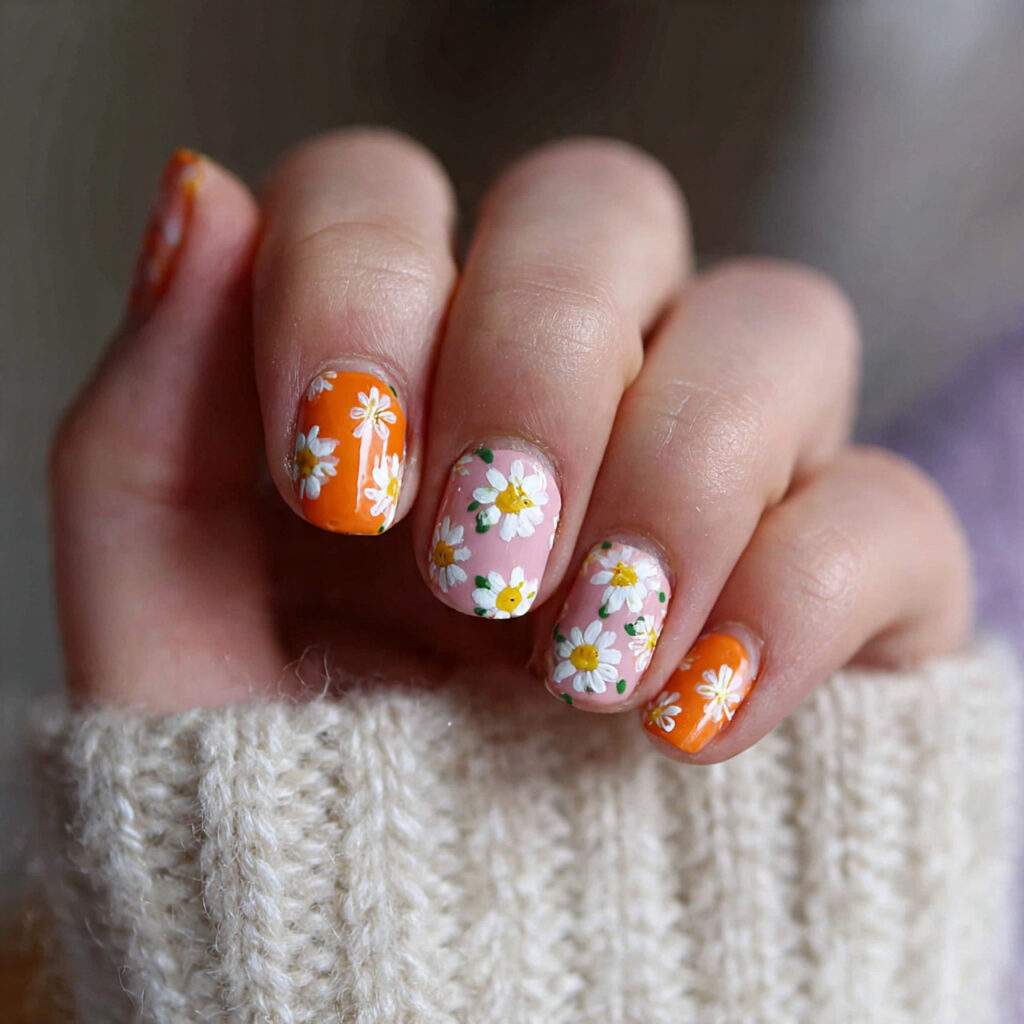
Daisy chain designs bring a touch of nostalgic charm and cheerful energy to short nails, as connected or repeated daisy motifs create a sense of visual rhythm. These happy flowers, with their simple petal structure, translate beautifully to nail art while remaining appropriately scaled for shorter lengths without any adaptation needed. The repetitive nature of daisy patterns creates a soothing visual effect that’s both calming to view and stylish to wear.
The classic approach to daisy chain designs involves painting small daisies that appear to connect or flow from one nail to the next, creating movement and continuity across your entire manicure. Each daisy typically features five to eight rounded petals around a central yellow spot, making them accessible for all skill levels while delivering charming, recognizable floral imagery. You can feature individual daisies on each nail or create flowing chains that suggest natural growth patterns.
Traditional white petals with yellow centers remain a timeless and versatile choice, but contemporary interpretations embrace colored daisies in pink, lavender, or even black for dramatic modern effects. Some designs feature daisies as negative space elements, outlining petal shapes against colored backgrounds rather than painting filled flowers. The compact, circular shape of daisies fits naturally within short nail space, making them one of the most flattering floral choices for elegant shorter lengths.
8. Rose Bud Whimsy
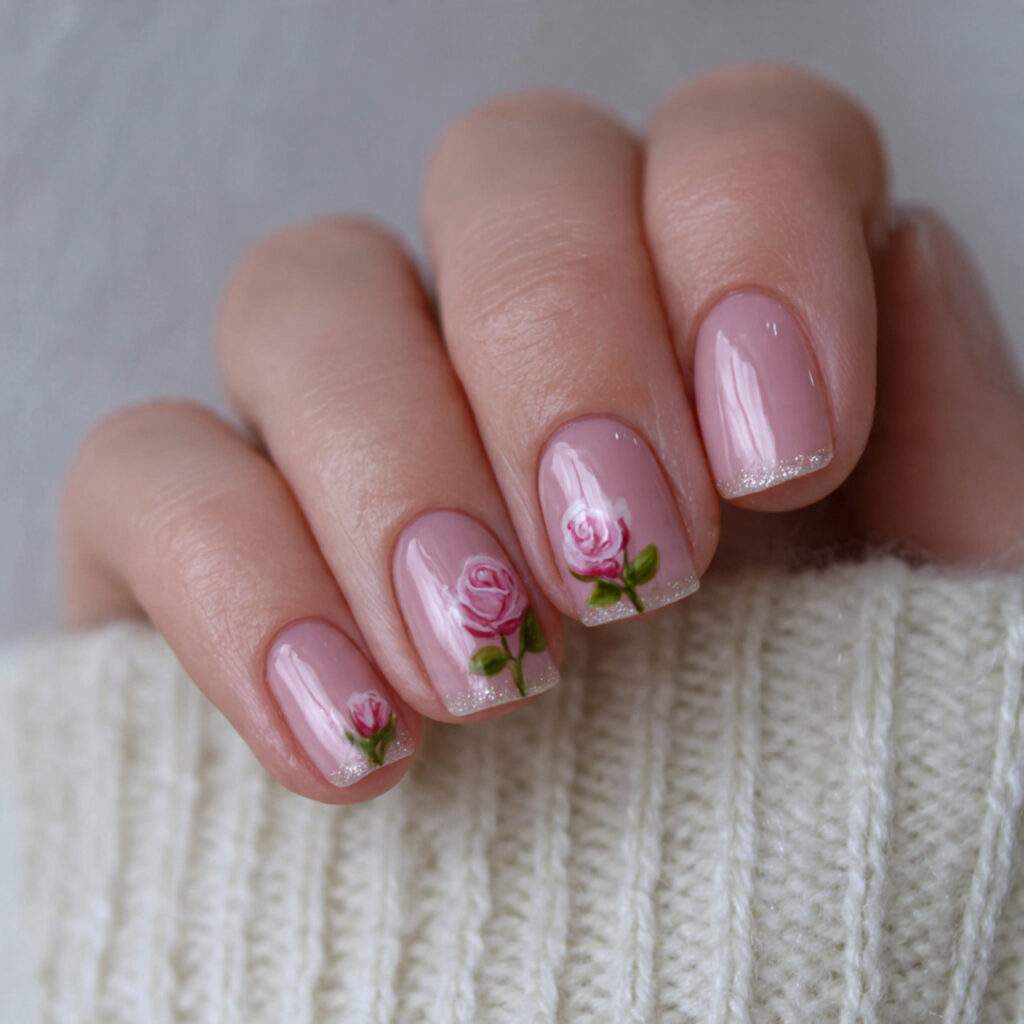
With rose bud corner designs, short nails receive a touch of romantic flair through deliberate placement of small rose buds in the upper corners or along nail edges. By strategically leveraging this technique, intricate floral art can make a bold statement without overwhelming the nail surface. In the context of short nails, corner placement proves particularly effective in drawing attention to nail width and creating visual interest without compromising limited vertical space.
The compact, tightly clustered petals of rose buds allow for intricate detail while occupying minimal space, making them an ideal choice for short nail applications. These delicate flowers can be painted in profile view, showcasing their characteristic spiral structure, or from above, displaying the circular arrangement of unfurling petals. Unlike full-blooming roses that might dominate short nails, rose buds offer a romantic appeal that is thoughtfully scaled to fit the nail.
Soft pink rose buds against a nude or white background evoke classic, timeless elegance suitable for any occasion, while red roses against a black or burgundy background deliver dramatic sophistication. Modern interpretations feature unexpected combinations like purple roses on mint green or white roses on navy blue. Adding tiny green leaves or delicate vine tendrils connecting buds across multiple nails enhances botanical authenticity while maintaining elegant simplicity.
9. Cherry Blossom Elegance
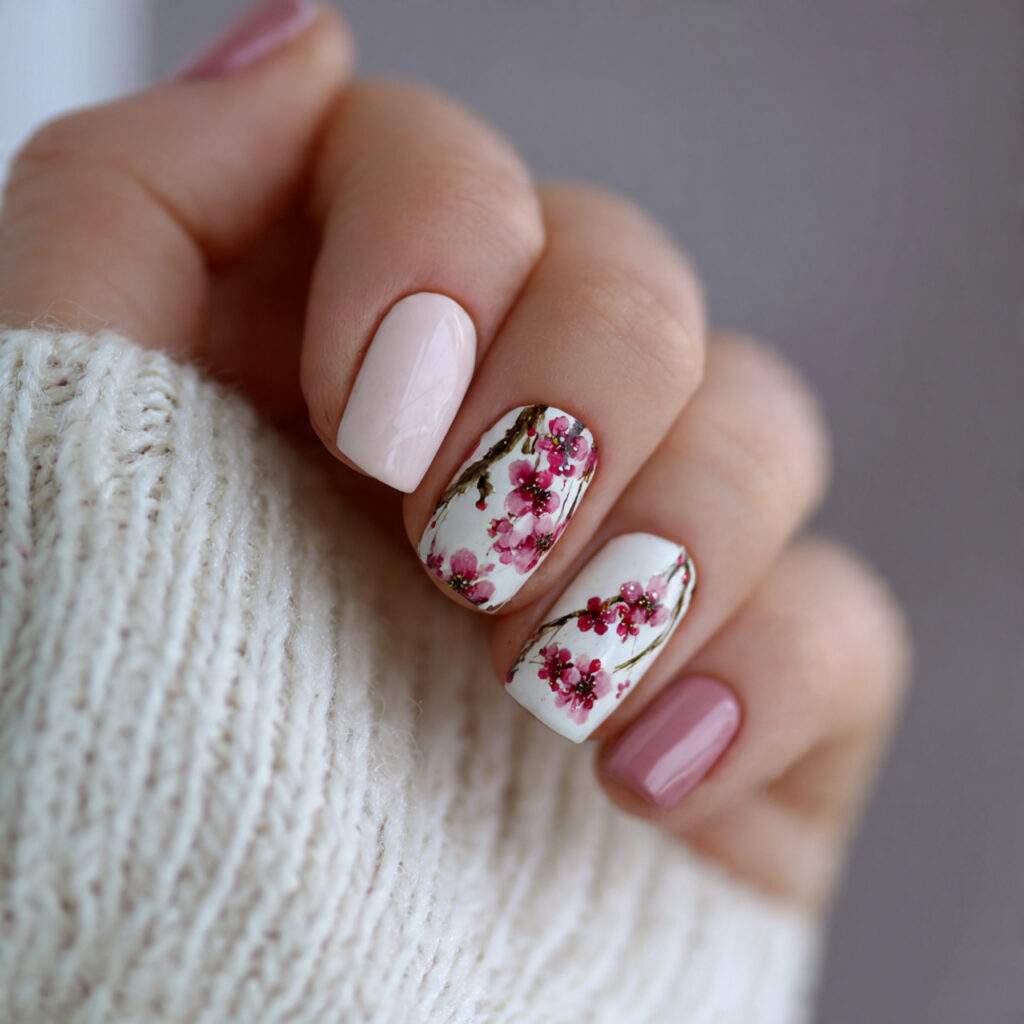
Cherry blossom designs capture the essence of ephemeral spring beauty through delicate five-petaled flowers that symbolize renewal and the fleeting nature of life. These iconic blooms translate seamlessly to short nails, as their naturally small, dainty structure requires no scaling down to fit limited nail space. Cherry blossom nail art carries significant cultural meaning while offering universal aesthetic appeal that works beautifully across different style preferences and occasions.
The distinctive features of cherry blossoms include five soft pink or white petals with darker pink edges and prominent stamens that create instantly recognizable designs. For short nails, cherry blossoms can be scattered individually across nails, clustered in small groups suggesting branches in bloom, or painted as single accent flowers with extending branch elements. Adding brown branch lines connecting flowers across multiple nails creates cohesive designs that tell botanical stories across your entire manicure.
Traditional colors feature soft pinks, whites, and browns, but contemporary interpretations expand to lavender, peach, or even metallic variations while maintaining the recognizable five-petal structure. Background colors range from traditional nude and soft pink to modern choices like sage green, dusty blue, or dramatic black that makes delicate petals pop. The natural delicacy of cherry blossoms perfectly complements the refined aesthetic that short nails inherently possess.
10. Floral Negative Space
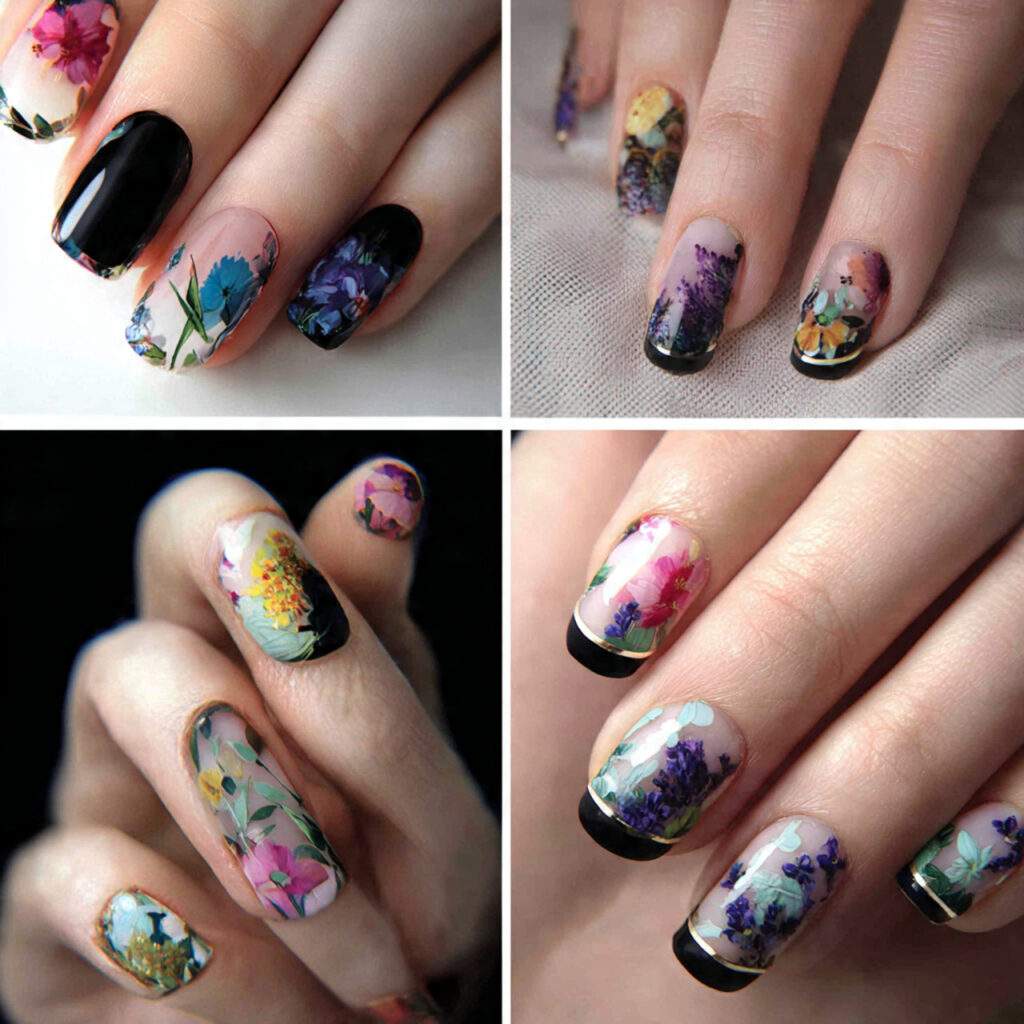
Floral negative space nail art techniques create a minimalist, modern aesthetic by embracing the natural nail as an integral part of the design. This contemporary approach involves painting intricate floral patterns around clear areas or outlining flower shapes that remain unfilled, allowing the natural nail to shine through in cleverly choreographed spots. By incorporating negative space, short nails avoid overwhelming color overload while introducing visually striking contrast and dimension.
Various techniques can be employed to execute floral negative space designs, ranging from deceptively simple flower outlines against richly hued backgrounds to complex designs that suggest petals through skillful paint placement around clear nail areas. Popular approaches include painting a bold, colored background on nail portions, leaving flower-shaped areas transparent to create a stained-glass effect, or using delicate lines to imply stems and leaves with clear spaces between elements. This versatility makes floral negative space a desirable choice for creative nail art enthusiasts.
Saturated colors like deep berry tones, navy, or emerald green create a stunning contrast with clear spaces, causing floral patterns to pop dramatically on short nails. In contrast, nude or sheer pink polishes produce understated, elegant looks where negative space feels intentional rather than unfinished. The addition of metallic polishes adds a luxurious touch, with gold or silver outlines around clear flower shapes creating sophisticated, high-end aesthetics perfectly suited to refined short nail styles.
11. Subtle Floral Gradient
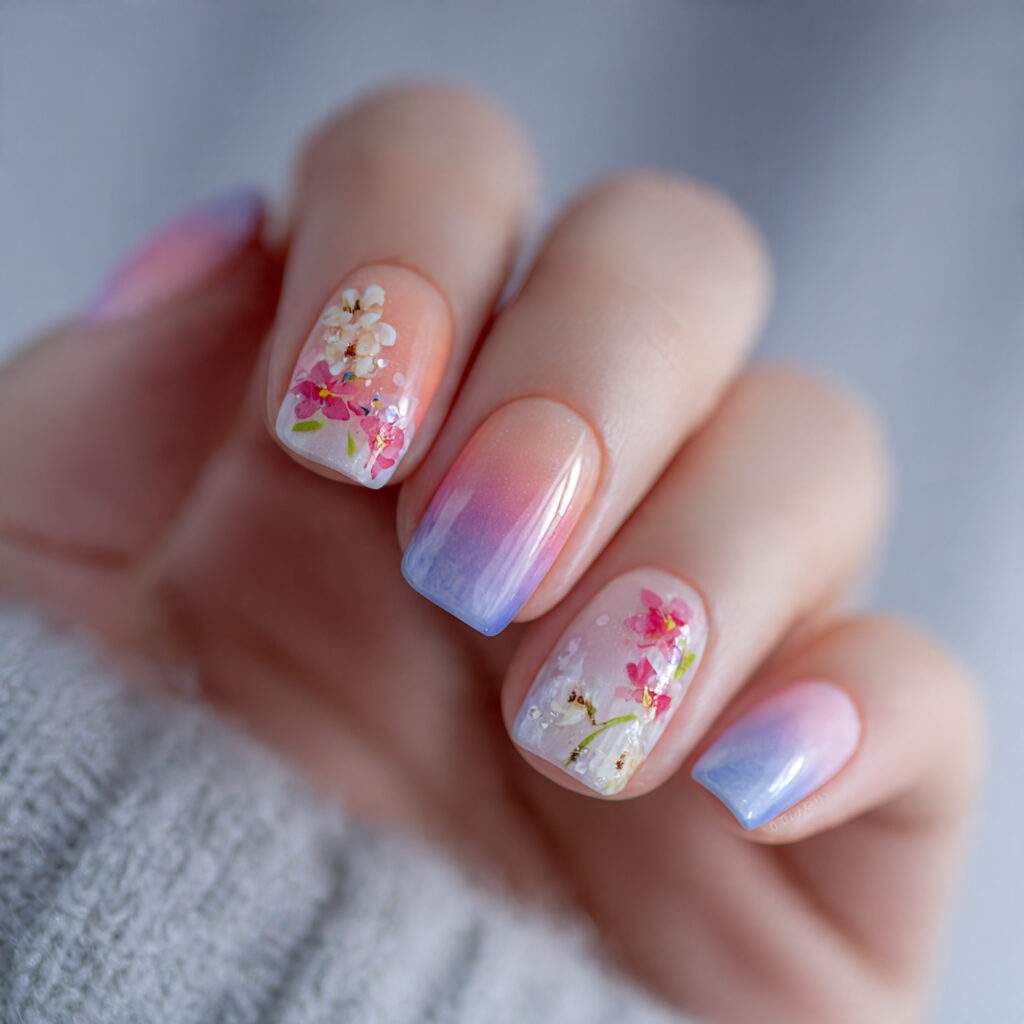
Subtle floral gradients combine the beauty of color gradients with delicate floral elements to create visually stunning manicures that perfectly complement short nails. This approach features soft, ombre-inspired color transitions between complementary hues, topped with dainty floral elements that enhance rather than compete with the gradient effect. The resulting design creates a sense of depth and visual movement that makes short nails appear more dynamic and captivating without overwhelming their natural proportions.
Creating floral gradients involves establishing smooth color transitions across nail surfaces using sponging techniques to blend two or more polish shades seamlessly. Once the gradient base is set, small floral elements are strategically added, often concentrated in lighter areas to maintain visibility or placed along gradient transition lines to emphasize color changes. By keeping flowers simple and small-scale, the gradient’s subtle beauty is preserved and enhanced.
Pink-to-white gradients paired with deeper pink flowers evoke romantic monochromatic elegance, while purple-to-blue transitions with white flowers deliver cool-toned sophistication. Coral-to-yellow gradients with white or green floral accents evoke tropical sunset vibes. The gradient creates a natural vertical flow that subtly elongates nail appearance, while added floral elements provide visual interest without requiring large design spaces for impact.
12. Vintage Botanical Illustration
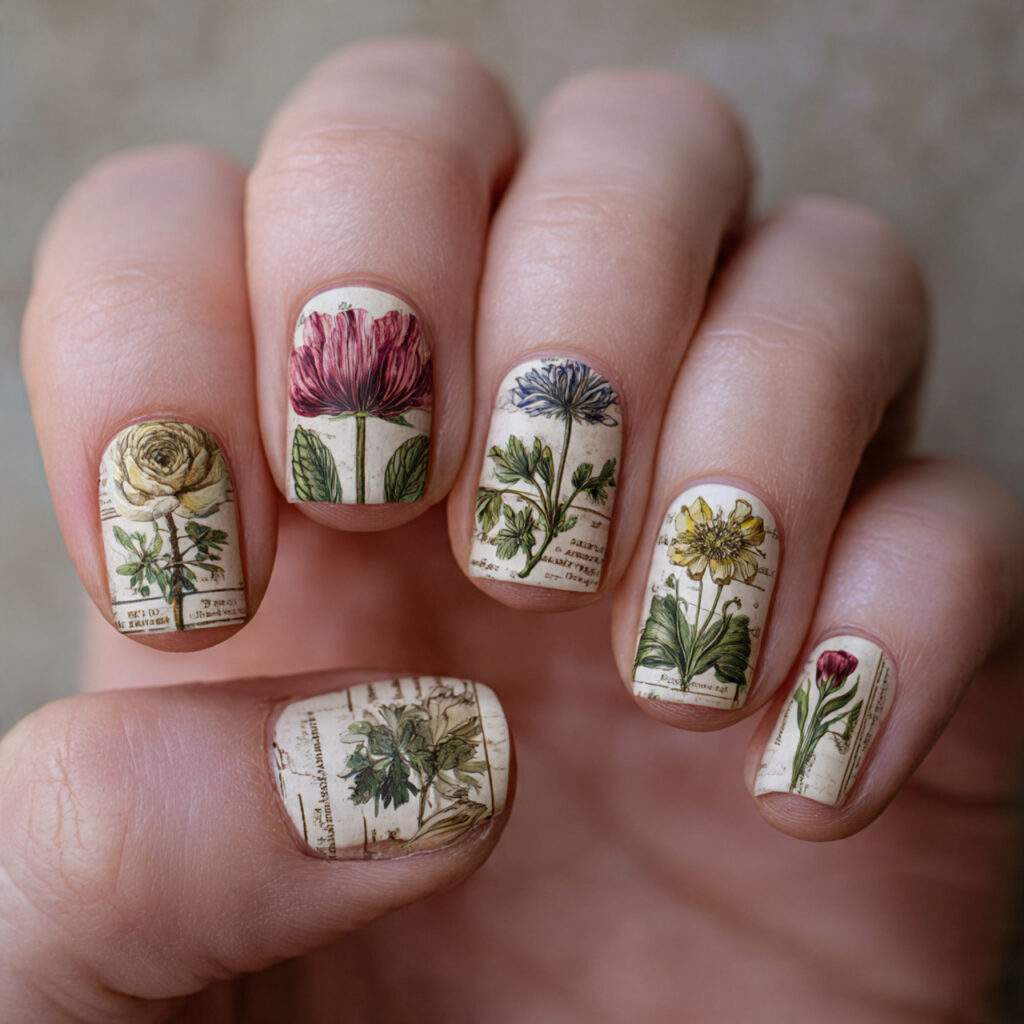
Vintage botanical illustration designs for short nails masterfully blend scientific precision and classic elegance, transporting viewers to a bygone era with intricate, realistic depictions of flowers reminiscent of antique botanical texts. This captivating design style draws inspiration from meticulously hand-drawn plant illustrations found in rare, antique tomes, showcasing accurate flower anatomy and nuanced color variations. For short nails, simplified versions of botanical illustrations create refined, museum-worthy nail art that exudes both intellectual curiosity and timeless beauty.
Key elements of this design style include meticulous flower structure, subtle shading to achieve dimension, and often the incorporation of leaves, stems, or roots to provide a complete plant representation. Unlike stylized or abstract florals, botanical illustrations strive for recognizable botanical accuracy while maintaining artistic allure. On short nails, this may involve a single detailed flower per nail with clearly visible structure, or a coordinated series of illustrations across multiple nails collectively representing a complete plant specimen.
Muted, naturalistic tones dominate these designs, featuring soft pinks, dusty purples, sage greens, and creamy yellows set against weathered paper or parchment-colored backgrounds. Some designs incorporate fine black or brown line work reminiscent of ink illustrations, while others employ hand-colored aesthetics with watercolor-style applications. The scientific precision of these designs works beautifully in compact spaces, where every detail contributes meaningfully to the overall composition.
13. Monochromatic Floral Elegance
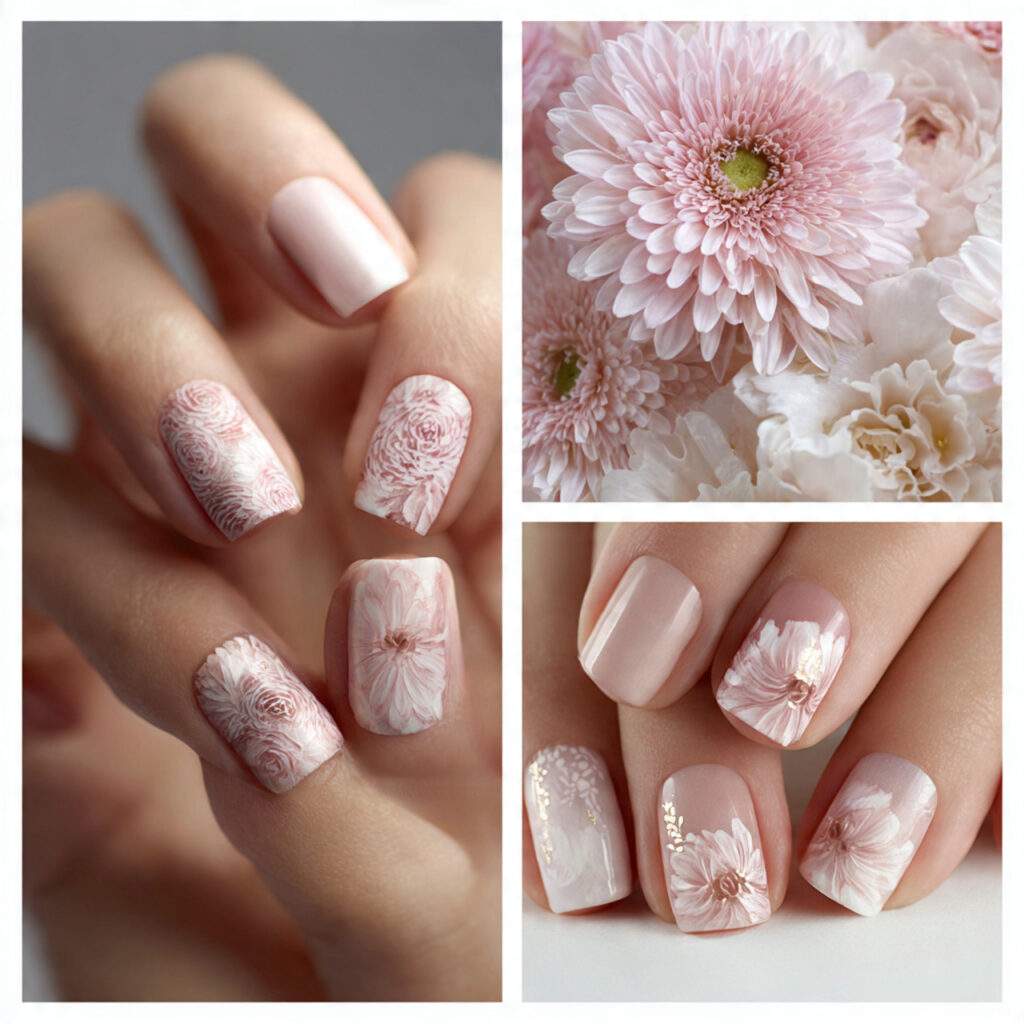
Monochromatic floral designs for short nails create sophisticated, harmonious nail art by working within single color families, using various shades and tints to craft floral patterns with subtle depth. This refined approach eliminates potential visual chaos of multiple competing colors, instead creating cohesion through tonal variation. For short nails, monochromatic florals offer elegant sophistication that feels intentional and polished rather than busy or overwhelming.
The technique involves selecting base colors and then using lighter and darker versions of the same hue to create flower petals, centers, and details. For example, pink monochromatic designs might feature soft blush bases, medium pink petals, and darker rose centers, all staying within the pink color family. This tonal layering creates dimension and distinguishes floral elements without requiring contrasting colors, resulting in a cohesive and polished appearance.
Monochromatic floral designs in pink deliver classic feminine elegance, while purple variations create regal sophistication and blue monochromatic florals feel calming and contemporary. Green designs offer unique botanical authenticity, and even neutrals like browns, grays, or nudes create stunning monochromatic patterns that feel modern and minimalist. The color cohesion of these designs creates visual unity that makes short nails appear polished and intentional rather than cluttered.
14. Tiny Tulip Tips
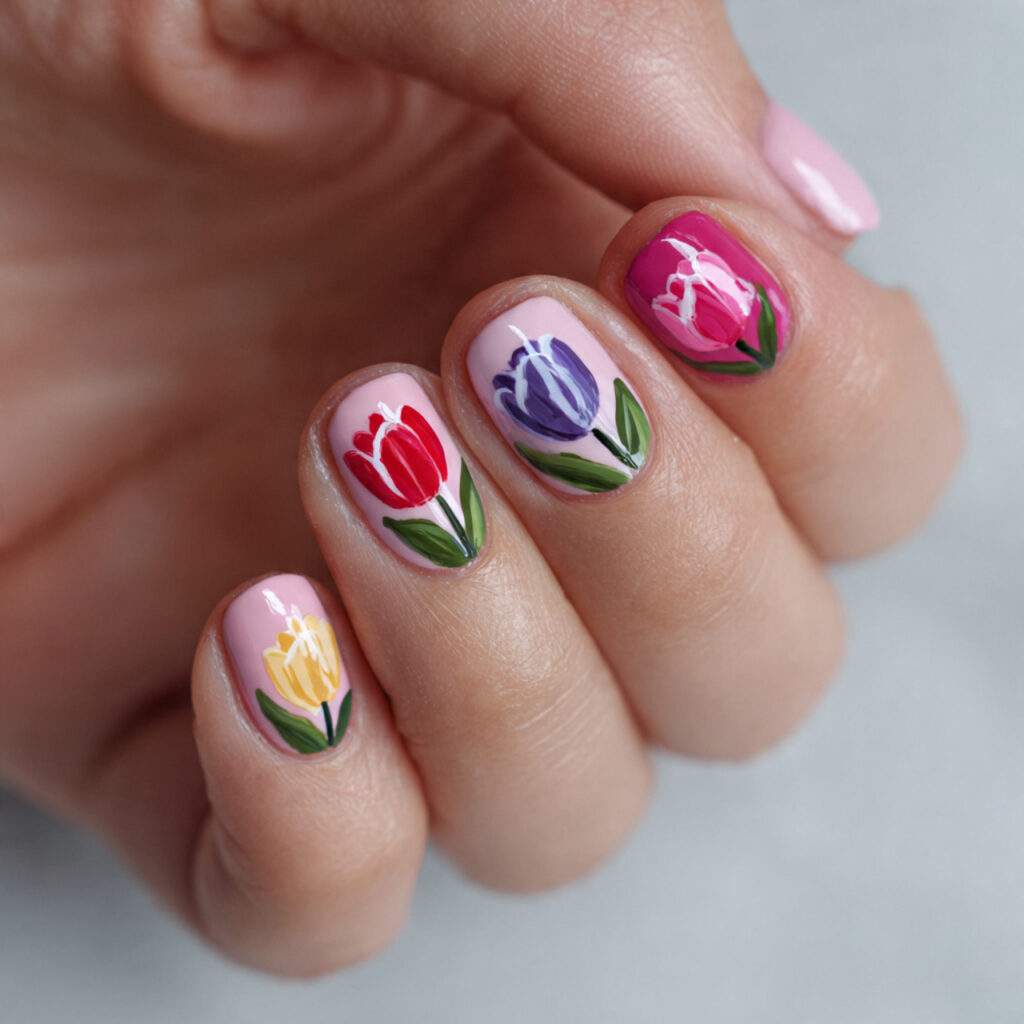
When it comes to short nails, tiny tulip designs bring a touch of springtime magic, capturing the essence of perfect love and new beginnings through the iconic cup-shaped flowers. The tulip’s simple, elegant form makes it an ideal choice for nail art, requiring minimal detail work while retaining its instantly recognizable charm. By scaling tulips perfectly for short nails, nail artists can create maximum visual impact by concentrating them near the tips or corners.
The characteristic tulip shape – a symmetrical cup or U-form with pointed or rounded petals – makes these flowers accessible to all skill levels. On short nails, tulips might appear as simple side-view silhouettes showcasing their distinctive shape or, when viewed from above, display characteristic petal arrangements. Some designs feature tulips on stems with simple leaves, creating complete botanical compositions, while others focus solely on flower heads for a sense of simplified elegance.
Classic red tulips create bold, romantic statements, while pink and purple varieties deliver soft, feminine elegance. Yellow tulips bring cheerful energy to the manicure, and white tulips offer clean, sophisticated beauty. Contemporary designs might feature color-blocked tulips in unexpected combinations like black and white or rainbow arrangements. The naturally compact, upright form of tulips fits beautifully within vertical nail space without requiring width extensions.
15. Delicate Baby’s Breath Pattern
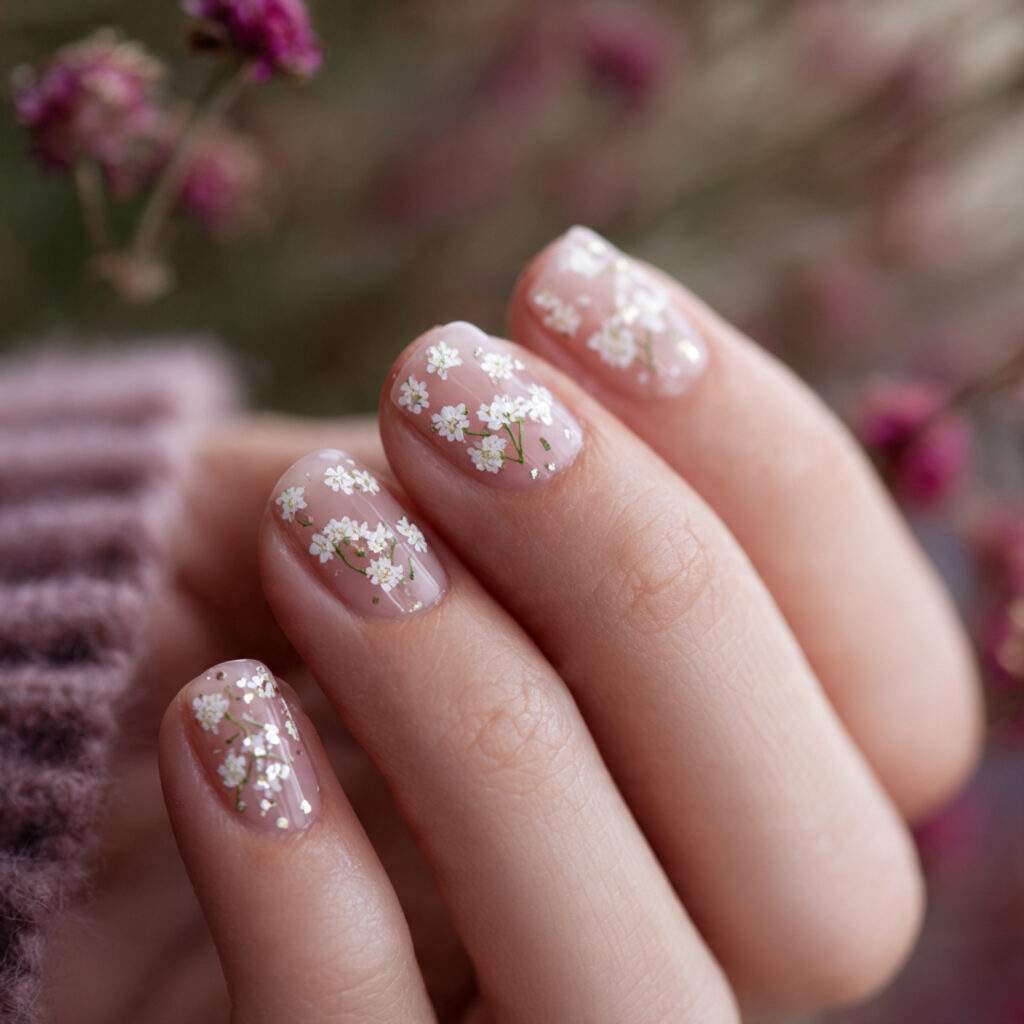
Baby’s breath designs bring airy, romantic charm to short nails through tiny flower clusters that create texture and visual interest without overwhelming limited space. These miniature flowers, beloved in wedding bouquets for their delicate beauty, translate perfectly to nail art at their naturally small scale. For short nails, baby’s breath patterns offer ideal solutions for achieving abundant floral coverage while maintaining elegant simplicity.
Creating baby’s breath patterns involves using fine dotting tools or thin brush tips to dot tiny flower clusters across nail surfaces. Each individual “flower” might be as simple as a small white or cream dot, with multiple dots grouped together suggesting flower clusters. More detailed versions might add tiny stems connecting flowers or vary dot sizes slightly for organic, natural-looking arrangements.
Traditional designs feature white or cream flowers staying true to natural baby’s breath appearance, but contemporary interpretations embrace colored variations including soft pink, lavender, or even metallic gold for modern elegance. Background colors range from nude and soft pink for romantic, bridal aesthetics to deeper jewel tones like navy or burgundy that make white baby’s breath patterns pop dramatically on short nails.
16. Sunflower Accent
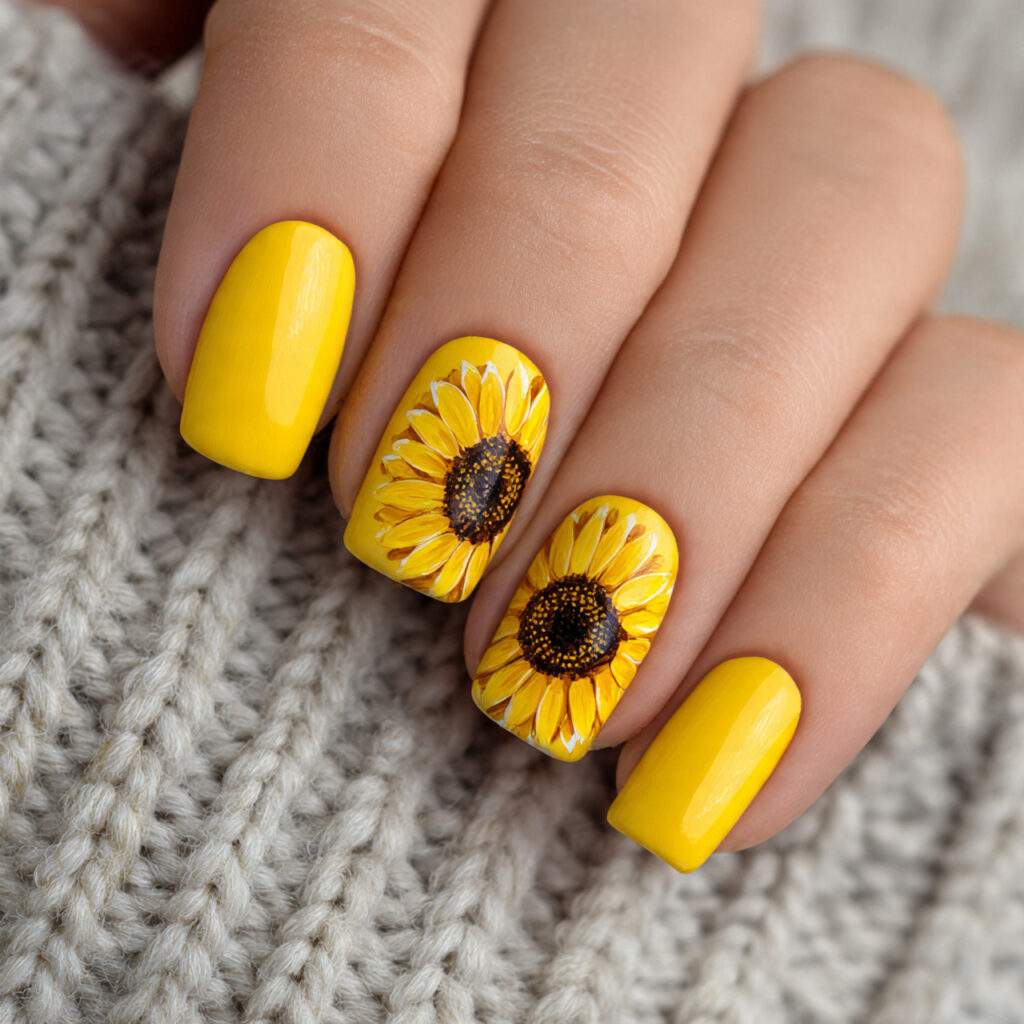
Sunflower-inspired nail art brings a burst of sunshine to short nails, incorporating the vibrant yellow blooms that symbolize happiness and loyalty. To balance the iconic flower’s size, designers often employ simplified or partial sunflower designs as accent elements or corner decorations. The distinctive radial petal structure and characteristic colors make sunflowers instantly recognizable, even when scaled down or stylized for nail art applications.
Sunflower designs on short nails often focus on capturing the flower’s essence without requiring a large canvas. This might involve painting small sunflowers from unique angles, showcasing fewer petals, or featuring stylized geometric sunflowers with simplified petal shapes. The characteristic yellow petals and dark brown centers make sunflowers immediately identifiable in simplified form, even without the need for intricate details. By playing with proportions and perspective, designers can create visually appealing sunflower designs that thrive on short nails.
17. Lavender Sprigs
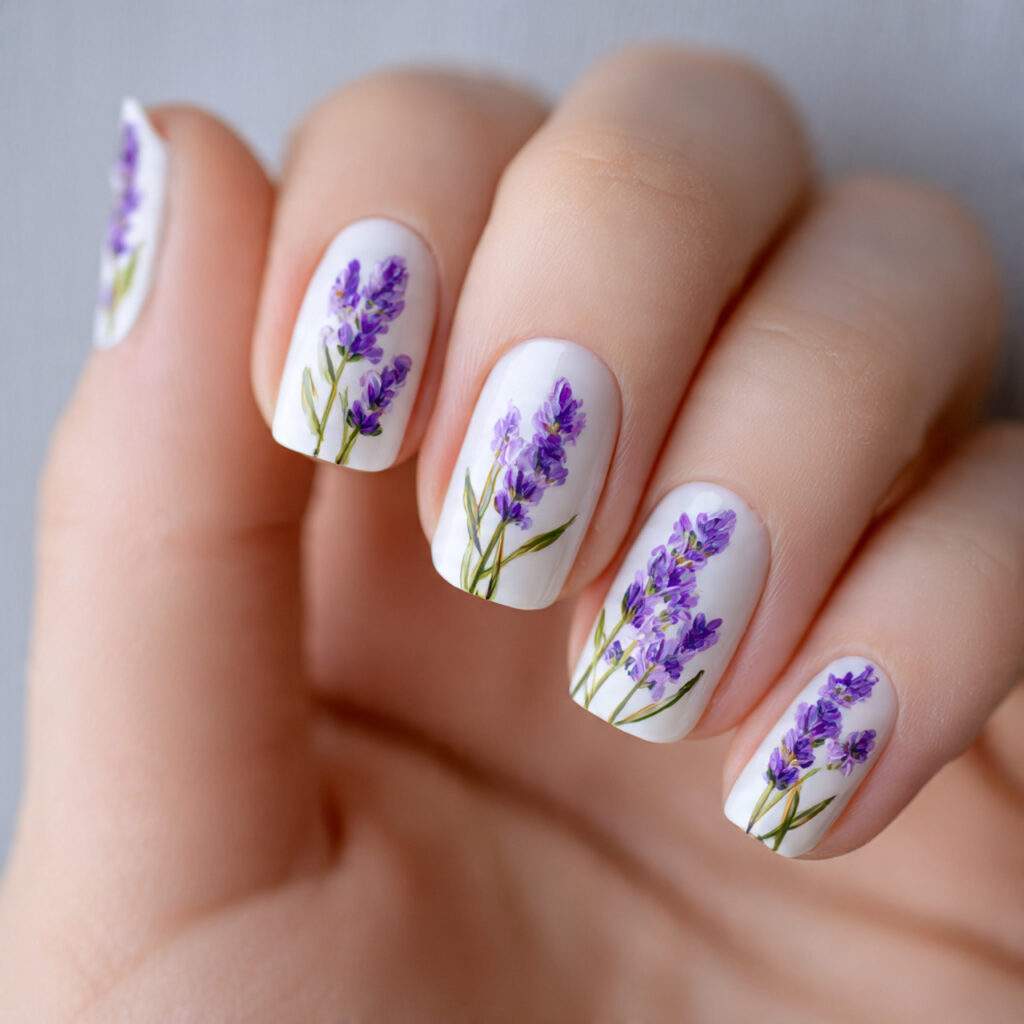
Lavender sprig nail art adds a touch of herbal elegance to short nails, featuring delicate purple flower clusters arranged along simple stems. These aromatic flowers, cherished for their calming properties and beautiful purple hues, create sophisticated nail art that feels both botanical and refined. For short nails, lavender sprigs offer an ideal combination of detail and simplicity, as their naturally linear structure adapts beautifully to vertical nail space.
The characteristic appearance of lavender – small purple florets clustered along thin stems with narrow gray-green leaves – translates beautifully through simplified illustration. On short nails, lavender sprigs can extend diagonally from corners, run vertically along nail sides, or appear as small clusters without stems for simplified versions. The repetitive structure of tiny florets creates a soothing visual rhythm while maintaining delicate scale appropriate for shorter lengths. By embracing the beauty of simplicity, designers can create stunning lavender sprig designs that shine on short nails.
18. Hibiscus Tropical Touch
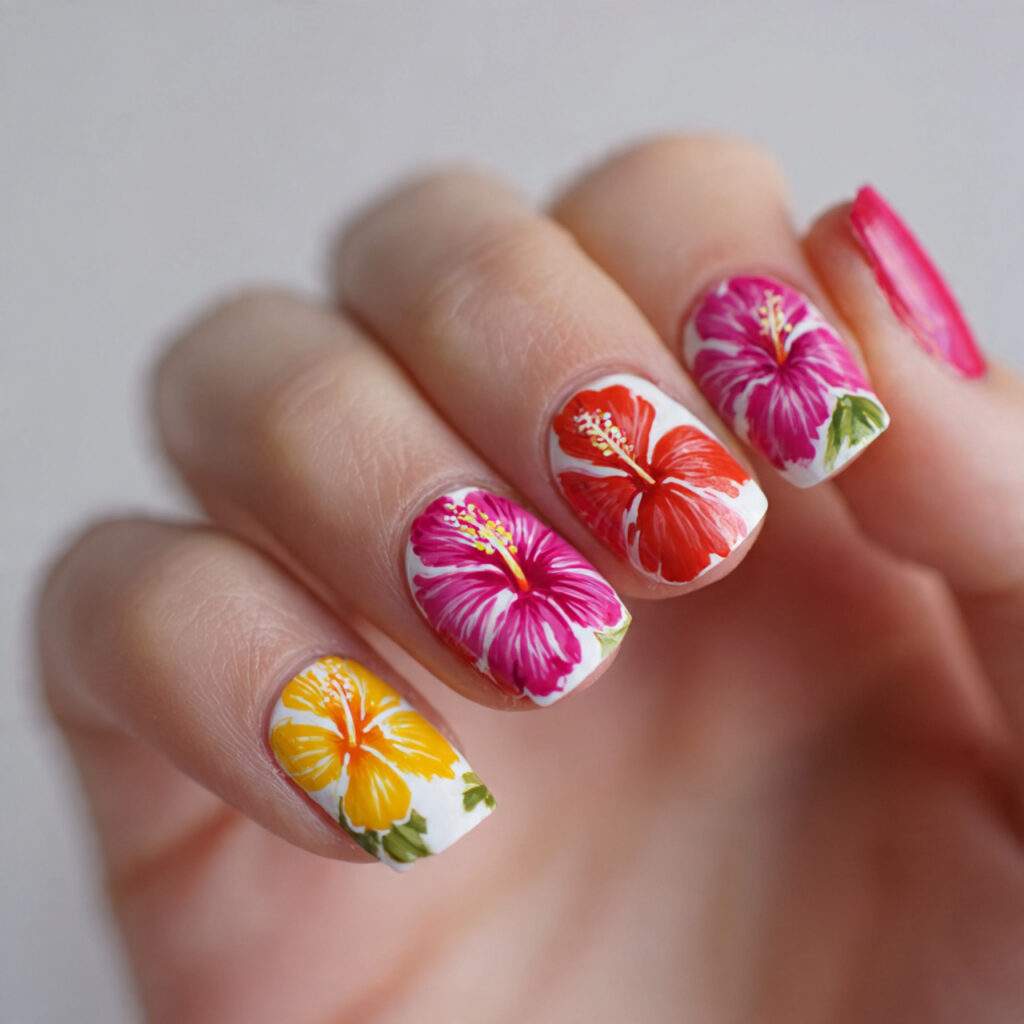
18.1. Large in Life
Large hibiscus designs transport the beauty of tropical islands to short nails, showcasing the iconic five-petal flower in all its glory. By cleverly scaling and positioning these blooms, artists can capture the essence of these stunning flowers on even the smallest of nails. The distinctive stamen and delicate petals make hibiscus flowers instantly recognizable, even in simplified nail art form.
19. Wildflower Meadow Mix
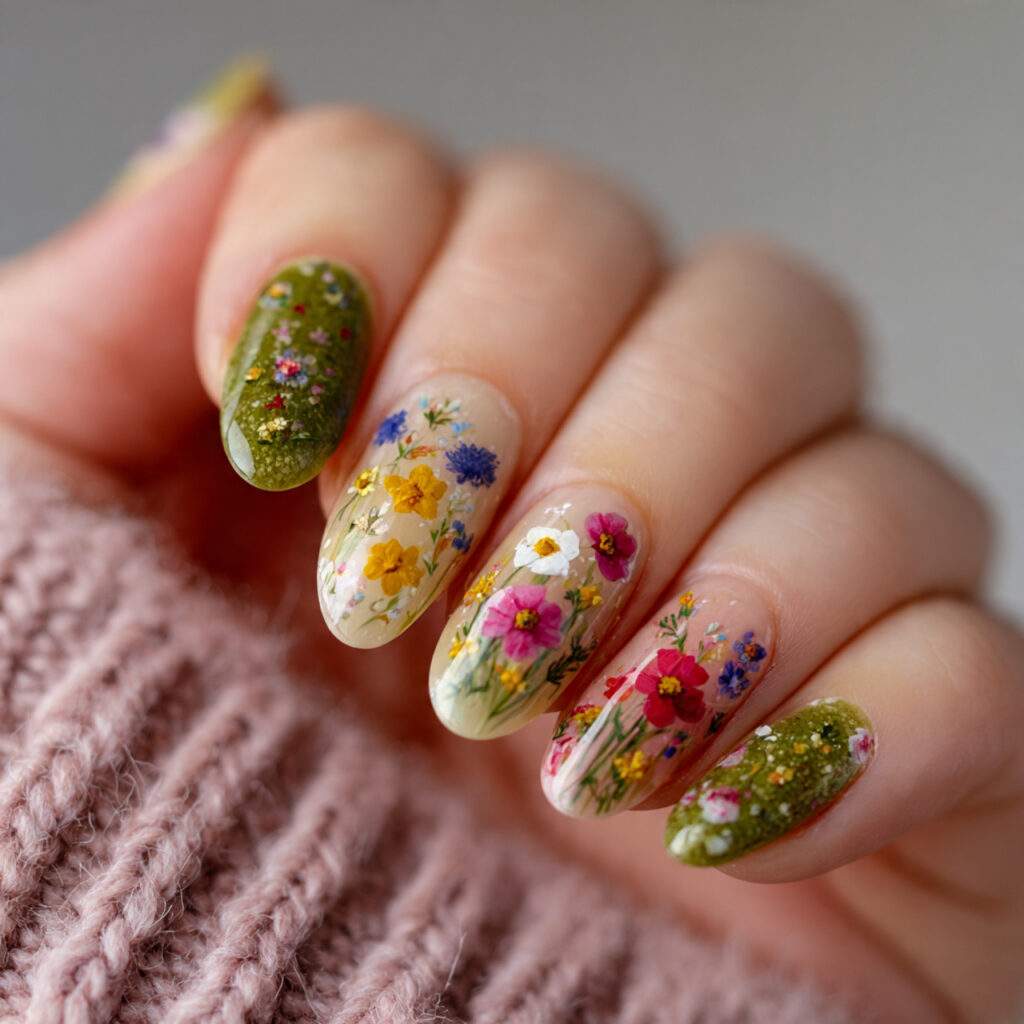
19.1. Blooming Diversity
Wildflower meadow designs bring a charming, naturalistic touch to nail art by combining varied flower types in organic arrangements. This approach celebrates botanical diversity, featuring multiple flower varieties across the manicure rather than focusing on a single type. For short nails, wildflower mixes offer the advantage of using many small-scale flowers that fit naturally within limited space, creating a garden-inspired beauty that’s both abundant and captivating.
19.2. The Beauty of Imperfection
The essence of wildflower meadow designs lies in their apparent randomness and natural diversity, mimicking how flowers actually grow in meadows and fields. This might involve combining simple daisies with tiny forget-me-nots, adding clustered baby’s breath alongside individual larger blooms, or mixing multiple flower types and colors across different nails. The varied scale and types prevent monotony while maintaining cohesion through color coordination or repeated elements.
19.3. Colors of Nature
Color palettes for wildflower meadow designs often feature diverse, natural hues that might coexist in actual meadows, including soft purples, yellows, pinks, and whites. Classic wildflower combinations are created by pairing these colors with natural tones like soft green, cream, or clear, suggesting grass, dried fields, or blue skies. The variety of small flower types prevents any single element from overwhelming limited nail space on short nails.
20. Peony Perfection
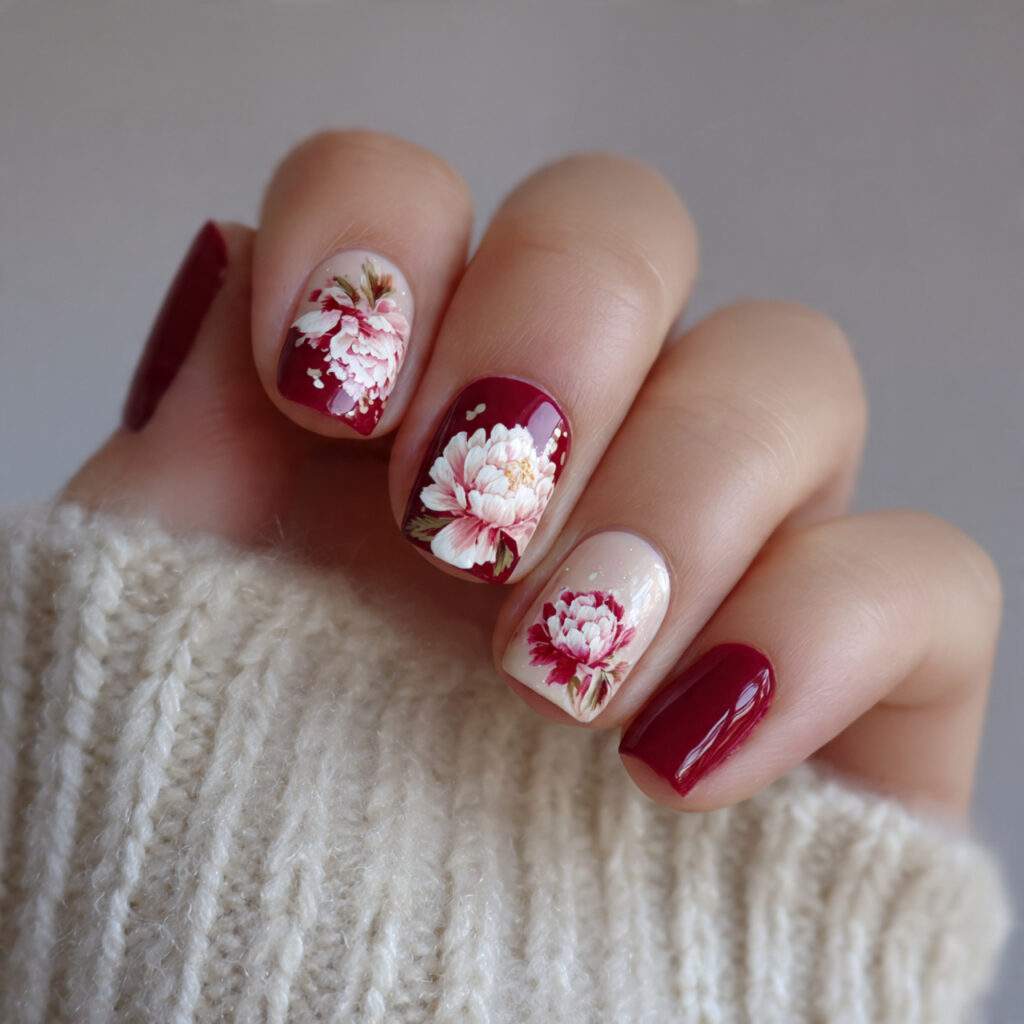
Peonies have become a timeless favorite in nail art, imbuing short nails with lush, romantic beauty and symbolizing prosperity, romance, and a charming sense of bashfulness. One key reason peonies work beautifully on short nails is that even their simplified or stylized versions retain the essence of these full, layered flowers. The romantic colors and unique layered petal structure of peonies make them the perfect choice for creating elegant, feminine nail art that seamlessly blends classic and contemporary styles.
To create stunning peony designs on short nails, artists often simplify the complex petal layers into more manageable elements while maintaining the flower’s characteristic fluffy, abundant character. This can involve painting peonies from above, showcasing concentric petal circles, or focusing on side views that highlight the petal layers. Abstract interpretations that suggest peony fullness through curved shapes and layered colors also work beautifully. The versatility of peony designs allows artists to experiment with various colors, from soft pinks to bold burgundies, creating a wide range of romantic, elegant looks perfect for special occasions.
Soft pink peonies bring a classic, timeless charm, exuding romantic elegance that’s perfect for weddings and other memorable events. White peonies, on the other hand, offer a clean, sophisticated beauty, while coral peonies add a warm, contemporary touch. Deep red or burgundy varieties deliver drama and richness, creating striking contrasts that make a lasting impression. Many designs feature subtle color variations within petals, transitioning from deeper edges to lighter centers, creating a dimensional quality characteristic of real peonies on elegant short nails.
21. Orchid Elegance
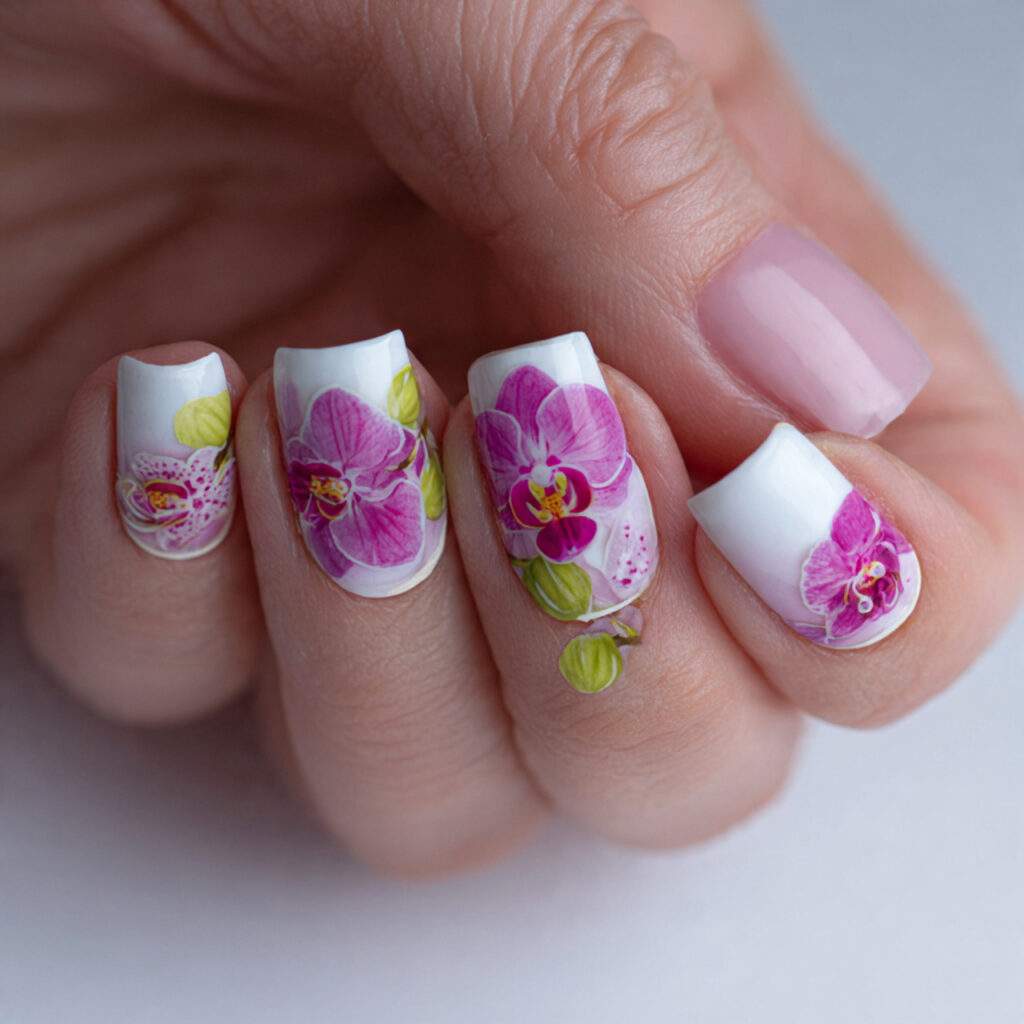
Orchids have long been associated with exotic sophistication and luxury, making them the perfect choice for creating upscale, elegant nail art on short nails. The distinctive flowers are known for their unique structure and striking beauty, which can be beautifully captured in simplified versions that fit perfectly on shorter nail lengths. The association of orchids with refinement and exotic beauty makes them ideal for creating special, intentional nail art designs.
When it comes to capturing the essence of orchids in nail art, artists can focus on their bilateral symmetry, distinctive lip petal, and often spotted or striped patterns. Simplifying these characteristic features while maintaining recognizability allows artists to create stunning orchid designs that work beautifully on short nails. Single accent flowers or partial blooms positioned strategically can make a dramatic impact, while the unique shape of orchid petals creates interesting silhouettes that don’t require large spaces.
Purple and white phalaenopsis orchids create classic, timeless elegance, while pink varieties deliver soft, feminine charm. Yellow and green cymbidium-style orchids offer unique sophistication, adding a touch of modernity to any design. Many orchid designs feature characteristic spotted or striped patterns on petals, adding detail and authenticity that enhances the exotic feel. Background colors are often kept neutral to allow the complex orchid structure to command full attention on short nail surfaces.
22. Poppy Field Elegance
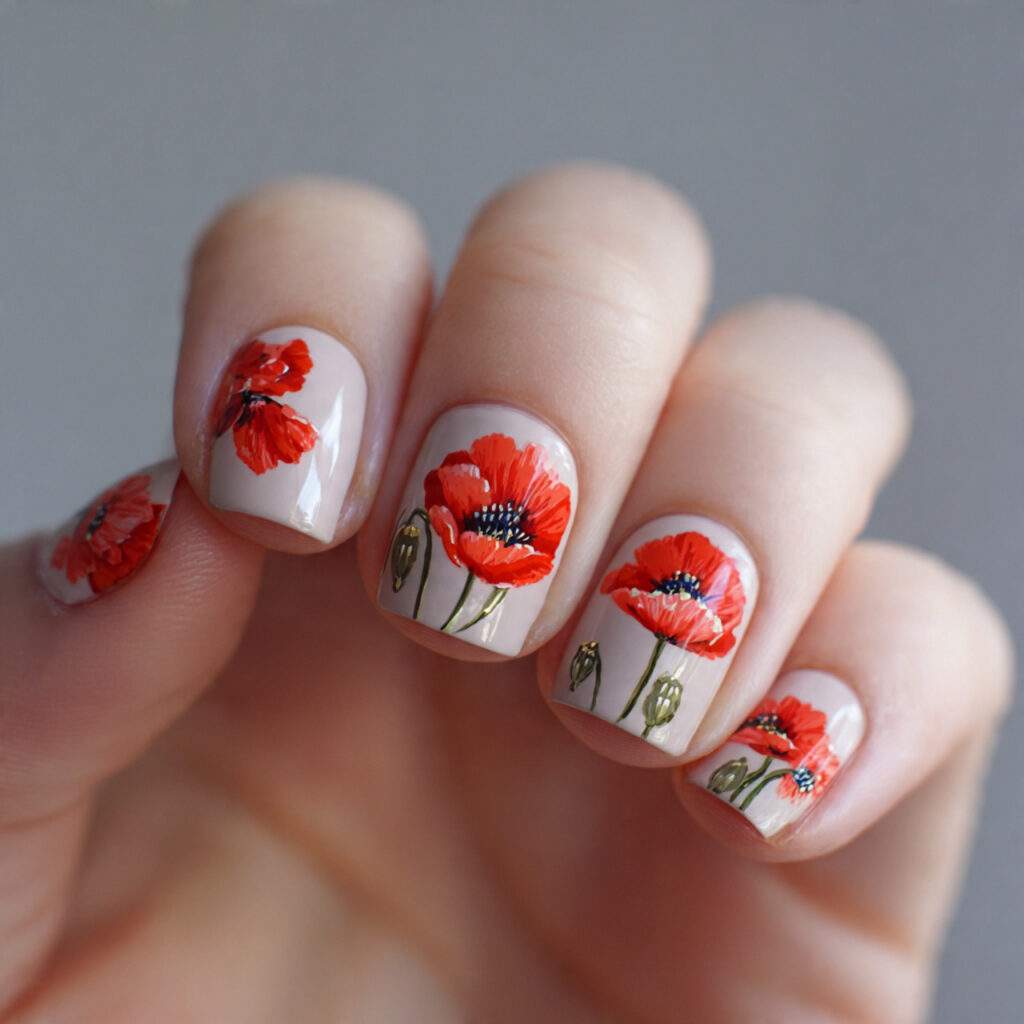
Short nails gain a splash of vibrant color and artistic flair through poppy-inspired designs, which feature the characteristic cup shape and delicate, tissue-paper-like petals of these iconic flowers. The prominent dark centers and radiating stamens add an instant touch of sophistication, making poppies an ideal choice for short nails. Their simple structure also means less intricate detail work is required, allowing for bold color choices that deliver significant visual impact.
When creating poppy designs on short nails, capturing the essence of these flowers is key. This can be achieved through a range of styles, from simplified front-view circles that evoke the opening of a bloom to side profiles that showcase the cup structure. Alternatively, stylized abstract versions can be used to convey the beauty of poppies through color and basic shape. Traditional red poppies with black centers create dramatic nail art, while orange California poppies bring a sunny warmth, and purple varieties offer a unique canvas for creative expression. The simplicity of the petal structure ensures that poppy designs remain recognizable and impactful on short nail lengths.
23. Forget-Me-Not Whispers
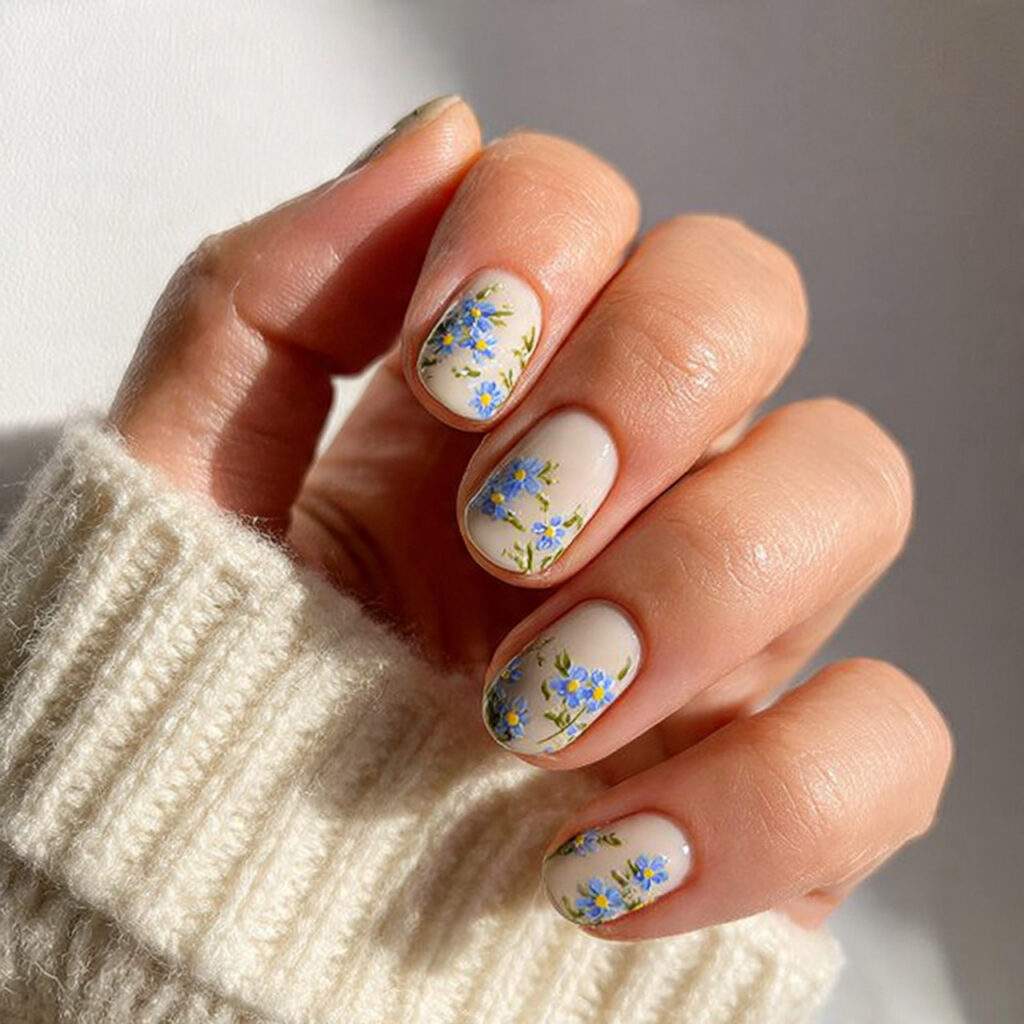
Forget-me-not designs bring a sentimental touch to short nails, featuring these tiny blue flowers that symbolize true love and remembrance. The miniature five-petaled blooms are perfectly proportioned for short nails, making them an ideal choice for delicate floral nail art. The clusters of small flowers create a sense of texture and visual interest while maintaining the refined elegance that shorter nail lengths are known for.
The characteristic features of forget-me-nots – tiny pale blue petals with yellow centers, grouped in clusters along curved stems – can be beautifully translated to nail art using simple dotting techniques. Each individual flower can be created with just a few small dots, making this design surprisingly accessible even for nail art beginners. On short nails, forget-me-not clusters can be concentrated in corners, scattered across the entire nail, or arranged to suggest natural growth patterns. Traditional designs typically feature pale blue or sky blue petals with bright yellow centers, although forget-me-nots also occur in pink and white varieties, offering softer alternatives. Background colors often lean towards natural tones, such as soft green to evoke gardens, cream or white for clean elegance, or soft gray for a contemporary minimalist look on elegant short nails.
24. Elevating Nail Art with Abstract Florals
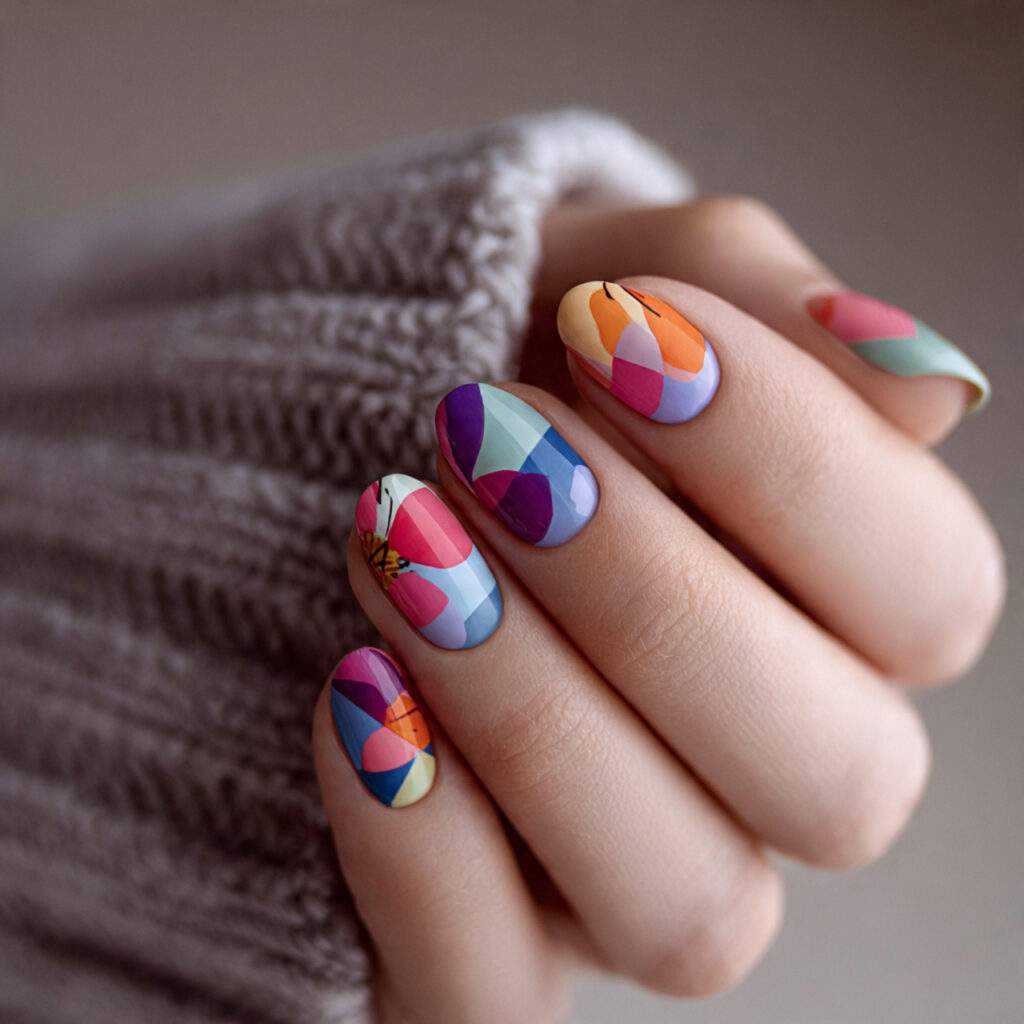
Abstract floral designs shatter conventional boundaries by transforming flowers into vibrant, abstract representations, yielding modern nail art tailored for shorter nails. This approach prioritizes artistic license over realism, embracing stylization, geometric interpretation, or impressionistic suggestion instead of precise botanical accuracy. By embracing this creative freedom, individuals seeking distinctive, cutting-edge nail art can explore a vast array of possibilities while navigating the constraints of shorter nail lengths with ease.
The inherent beauty of abstract floral designs lies in their liberating quality – flowers can be subtly hinted at through a symphony of color blocks arranged in petal-like configurations, intricate geometric shapes assembled into intricate flower patterns, or expressive lines and curves that evoke the fluid movement of blooming flowers without depicting specific species. This artistic approach empowers bold color combinations, innovative patterns, and modern aesthetics that transcend traditional floral nail art, pushing the boundaries of creative expression.
Color palettes in abstract floral designs often draw inspiration from contemporary art principles, frequently incorporating bold contrasts, unexpected complementary combinations, or monochromatic schemes with varied tonal values. Vibrant primary colors can create striking pop art effects, while muted tones can evoke sophisticated modern elegance. Metallic accents or thoughtfully incorporated negative space elements frequently take center stage, lending a modern edge to the design. The absence of realistic color requirements allows individuals to select palettes based solely on personal aesthetic preference and self-expression.